A
Group A
- 🇲🇽Mexico
- 🇿🇦South Africa
- 🇰🇷Korea Republic
- 🇨🇿Czechia
World Cup Betting
A new destination for World Cup match predictions, live odds, and fan-first betting experiences. Follow the biggest tournament in the world with a platform built for excitement, clarity, and speed.
Tournament Overview
The World Cup group stage is where the tournament begins to take shape, with every point carrying huge importance. Fans and bettors follow each match closely as favorites try to stay in control and underdogs look to create surprises.
Outright Market
World Cup 2026 winner odds highlight the main contenders expected to fight for the title. This market gives fans and bettors a clear view of how bookmakers rate the strongest teams before and during the tournament.

We've attempted to cut through Thomas Tuchel's selection headaches by picking his starting XI for England's opening World Cup clash.

Read details about when Italy last qualified for the World Cup and why this story still matters heading into 2026.

Read how one high-profile selection call could reshape England's starting lineup ahead of the tournament opener.
Group Stage Venues
The championship host cities and stadiums will play a major role in shaping the atmosphere of World Cup 2026. Each venue brings its own scale, character, and matchday experience, adding a unique backdrop to the tournament.
| Country | City | Stadium | Date / Match |
|---|---|---|---|
| United States | New York / New Jersey | MetLife Stadium |
June 13 — Brazil vs. Morocco
June 16 — France vs. Senegal
June 22 — Norway vs. Senegal
June 25 — Ecuador vs. Germany
June 27 — Panama vs. England
June 30 — Round of 32
July 5 — Round of 16
July 19 — Final
|
| United States | Los Angeles | SoFi Stadium |
June 12 — USA vs. Paraguay
June 15 — Iran vs. New Zealand
June 18 — Switzerland vs. Bosnia & Herzegovina
June 21 — Belgium vs. Iran
June 25 — Türkiye vs. USA
June 28 — Round of 32
July 2 — Round of 32
July 10 — Quarterfinal
|
| United States | Dallas | AT&T Stadium |
June 14 — Netherlands vs. Japan
June 17 — England vs. Croatia
June 22 — Argentina vs. Austria
June 25 — Japan vs. Sweden
June 27 — Jordan vs. Argentina
June 30 — Round of 32
July 3 — Round of 32
July 6 — Round of 16
July 14 — Semifinal
|
| United States | Miami | Hard Rock Stadium |
June 15 — Saudi Arabia vs. Uruguay
June 21 — Uruguay vs. Cape Verde
June 24 — Scotland vs. Brazil
June 27 — Colombia vs. Portugal
July 3 — Round of 32
July 11 — Quarterfinal
July 18 — Third-Place Match
|
| United States | Atlanta | Mercedes-Benz Stadium |
June 15 — Spain vs. Cape Verde
June 18 — Czechia vs. South Africa
June 21 — Spain vs. Saudi Arabia
June 24 — Morocco vs. Haiti
June 27 — DR Congo vs. Uzbekistan
July 1 — Round of 32
July 7 — Round of 16
July 15 — Semifinal
|
| Mexico | Mexico City | Estadio Azteca |
June 11 — Mexico vs. South Africa
June 17 — Uzbekistan vs. Colombia
June 24 — Czechia vs. Mexico
June 30 — Round of 32
July 5 — Round of 16
|
| Mexico | Guadalajara | Estadio Akron |
June 11 — South Korea vs. Czechia
June 18 — Mexico vs. South Korea
June 23 — Colombia vs. DR Congo
June 26 — Uruguay vs. Spain
|
| Mexico | Monterrey | Estadio BBVA |
June 14 — Sweden vs. Tunisia
June 20 — Tunisia vs. Japan
June 24 — South Africa vs. South Korea
June 29 — Round of 32
|
| Canada | Toronto | BMO Field |
June 12 — Canada vs. Bosnia & Herzegovina
June 17 — Ghana vs. Panama
June 20 — Germany vs. Ivory Coast
June 23 — Panama vs. Croatia
June 26 — Senegal vs. Iraq
July 2 — Round of 32
|
| Canada | Vancouver | BC Place |
June 13 — Australia vs. Türkiye
June 18 — Canada vs. Qatar
June 21 — New Zealand vs. Egypt
June 24 — Switzerland vs. Canada
June 26 — New Zealand vs. Belgium
July 2 — Round of 32
July 7 — Round of 16
|
The Football 2026 World Cup is set to become one of the biggest football events in history. It will not only bring together the world’s strongest national teams, but also introduce a new tournament scale that changes how fans watch, analyze, and bet on international football. For supporters, it is a global celebration of the game. For bettors, it is a tournament packed with opportunities, from outright winner markets to goalscorer specials, live betting, and long-shot value picks.
What makes this edition especially important is its expanded format, broader geographic reach, and the sheer number of matches expected across the competition. More teams mean more storylines, more volatility, and more betting angles. Traditional powerhouses will still attract the shortest odds, but the format may also create room for surprises, unexpected qualifiers, and dark horses capable of going further than many expect.
Whether you are following the action as a football fan, exploring the tournament from a sportsbook perspective, or both, the 2026 World Cup is already shaping up to be a landmark event. Below, you will find everything you need to know about the competition, including the format, qualification picture, likely favorites, key players, betting markets, and practical wagering tips.
The Football World Cup is the most prestigious competition in international football, bringing together national teams from across the globe to compete for the sport’s ultimate prize. Held every four years, the tournament is watched by billions and stands as the pinnacle of the global football calendar.
The 2026 Football World Cup will be especially historic because it marks the beginning of a new era for the tournament. Unlike previous editions, this one will feature an expanded field of teams, creating a bigger and more inclusive competition. That means more nations, more matches, more rivalries, and a wider range of betting opportunities from the opening fixtures to the final.
For fans, this expanded version makes the World Cup even more exciting because it gives more countries the chance to compete on the biggest stage. For bettors, it introduces new variables. With more participants in the mix, traders and bookmakers will need to price a larger field, and that can create inefficiencies in markets early in the tournament. As a result, the 2026 World Cup is likely to be one of the most dynamic betting events in recent football history.
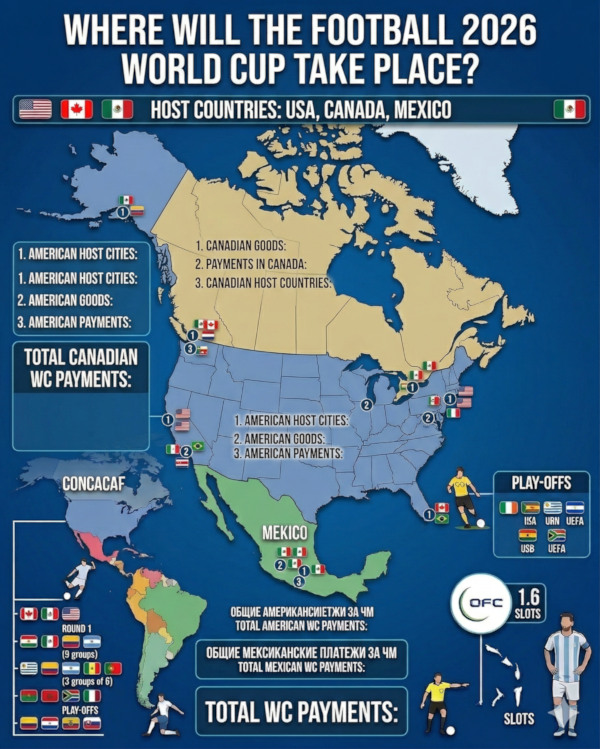
The Football 2026 World Cup will be hosted across three countries: the United States, Canada, and Mexico. This will be the first time in history that three nations have jointly staged the men’s World Cup, making it a truly continental event.
This multi-country setup adds a new dimension to the tournament. Matches will be played across a range of major cities and world-class stadiums, each offering a different atmosphere, climate, altitude profile, and travel challenge. That matters not just in football terms, but also in betting terms. Travel schedules, recovery time, weather conditions, and local fan support can all influence team performance over the course of a long tournament.
The United States is expected to host the majority of matches, while Canada and Mexico will also play central roles in delivering the event. Mexico, in particular, will add historical significance due to its rich World Cup heritage, while Canada’s involvement underlines the growing profile of football in North America.
For bettors, venue analysis could become one of the more overlooked yet useful tools during the competition. Some teams may adapt better to long-distance travel, some may struggle in hot conditions, and others may benefit from large diaspora support in certain cities. These are the kinds of details that can make a real difference when assessing match odds beyond just squad strength and recent form.
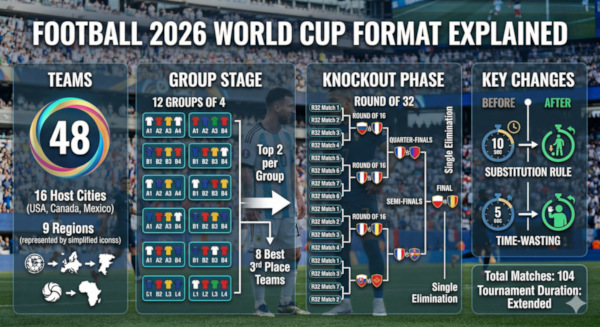
One of the biggest talking points surrounding the 2026 World Cup is the format. This edition is being expanded to include 48 teams, which is a significant jump from the 32-team structure used in previous tournaments. This change is designed to make the World Cup more inclusive, allowing more nations from different confederations to participate.
An expanded tournament naturally leads to more matches and a more layered competition. The group stage will involve a larger number of teams, and that will feed into an extended knockout bracket. For top nations, this means a longer path to the trophy. For lesser-known teams, it creates more room to dream about making history.
From a football perspective, the new format is likely to produce a mixed set of outcomes. On one hand, the elite teams should still have enough quality to progress deep into the tournament. On the other hand, more participants can create greater unpredictability in the early rounds. Teams with less World Cup experience may still find themselves in favorable group situations, while established nations could rotate more heavily, especially if schedule management becomes a major issue.
From a betting angle, the expanded format matters for several reasons:
First, there will be more markets overall. More fixtures mean more standard match markets, more team specials, and more long-term betting options.
Second, volatility may increase. With more teams entering the field, bookmakers will need to price nations that may not be as familiar to casual bettors. That can open up value opportunities, especially in qualification-related narratives, group betting, and player markets.
Third, squad depth becomes even more important. Teams with strong benches and tactical flexibility could have a major edge in a longer tournament. This could affect not only outright winner markets, but also betting on progression, quarterfinal appearances, and semifinal runs.
In practical terms, bettors should not view the 2026 World Cup exactly like previous editions. Historical World Cup performance still matters, but the new structure means this will be a different type of tournament, and that requires a fresh approach.
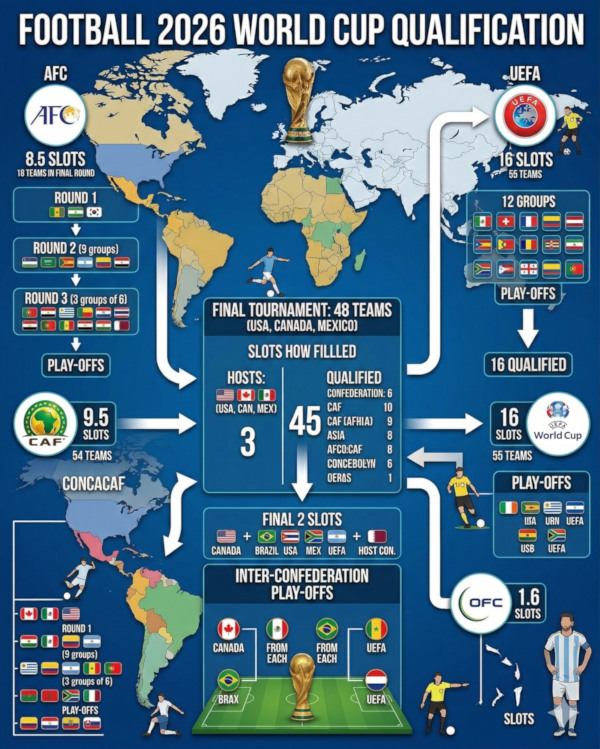
Qualification for the Football 2026 World Cup is one of the most interesting parts of the build-up to the tournament. With more spots available than ever before, many nations that would previously have struggled to reach the final tournament now have a more realistic path.
Each confederation receives an allocation of places, and teams must advance through their regional qualification campaigns to book a place. Because the field is larger, there will be more representation from Europe, South America, Africa, Asia, and the CONCACAF region. This creates a richer and more globally balanced tournament.
The host nations automatically receive massive attention even before qualification discussions begin because they enjoy familiarity with local conditions and the emotional lift of home support. In many cases, host teams can outperform expectations for exactly those reasons. Bettors should always keep that in mind when evaluating host nation prices, especially in group stage and progression markets.
The qualification process itself often reveals useful betting signals for the main tournament:
Another key factor is style of play. Some teams qualify through possession-heavy football, others through physical intensity or defensive compactness. Qualification form can provide clues, but bettors should be careful not to project regional dominance directly onto World Cup success without considering the leap in opposition quality.
The most successful betting approach is to treat qualification as one source of information, not the full answer. It should be combined with tactical matchups, player availability, travel demands, and projected group dynamics.
Every World Cup begins with a group of established contenders, and 2026 will be no different. The betting markets are likely to be led by football’s traditional powers, especially those with recent tournament pedigree, deep squads, and proven coaching stability.
Europe typically sends multiple genuine title contenders into every World Cup. Teams with strong domestic leagues, elite player development systems, and tactical discipline usually command respect in outright markets. Nations such as France, England, Spain, Germany, Portugal, and others are often near the top of the betting board because they combine individual talent with tournament experience.
European teams tend to be particularly strong in markets related to progression. Even when they are not viewed as the single best team in the tournament, they often have enough balance to make deep runs. This makes quarterfinal, semifinal, and “to reach the final” markets highly relevant when assessing European powerhouses.
South America’s leading nations are always central to the World Cup conversation. Brazil and Argentina, in particular, are almost certain to attract major betting interest thanks to their technical quality, football tradition, and ability to produce match-winners. These teams often carry public support, which can influence prices, especially in early outright markets.
When betting on South American teams, it is important to separate reputation from current structure. Some squads arrive with star names but tactical flaws. Others may not generate the same media buzz but are much more complete as tournament teams. Bettors who focus on balance, defensive reliability, and midfield control usually get a clearer picture than those who rely on brand power alone.
One of the most exciting parts of any World Cup is identifying the dark horse. These are teams that may not start among the leading favorites, but possess the discipline, chemistry, or tournament path to outperform expectations.
Dark horses often come from one of three categories:
In betting terms, dark horses can offer far better value than obvious contenders. Rather than backing them only in outright winner markets, bettors may find more realistic opportunities in markets such as:
Outright markets are driven by more than just raw talent. Several major factors influence pricing:
The smartest bettors understand that the best team on paper is not always the best outright bet. Value depends on price. If a strong contender is heavily overbet by the public, there may be more appeal in a slightly less fashionable side with similar underlying quality and much bigger odds.
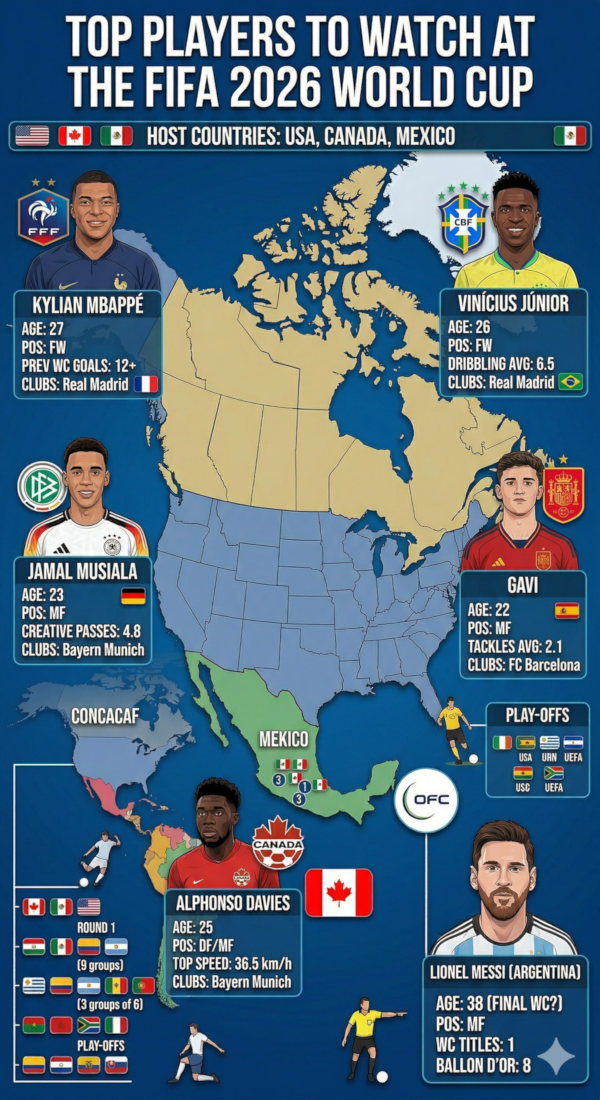
No World Cup is complete without stars capable of defining the tournament. The 2026 edition will likely showcase a mix of established icons, elite players in their prime, and young talents ready to break through on the biggest stage.
From a football point of view, star players shape matches. From a betting point of view, they shape markets. Goalscorer odds, assist props, player shot markets, card markets, and man-of-the-match discussions are all heavily influenced by individual quality and role.
The world’s elite attacking players will naturally attract the most attention. These are the names likely to headline top goalscorer betting, anytime scorer markets, and player specials. They also influence outright odds, because teams with decisive forwards often receive stronger support in winner and progression markets.
However, bettors should remember that reputation can inflate prices. A famous player may dominate headlines, but a less celebrated teammate taking penalties or free kicks can sometimes represent the better value in scoring-related markets.
Every World Cup introduces a new generation to the mainstream football audience. Talented young players often begin the tournament at longer prices in player markets because bookmakers and casual bettors tend to prioritize more established names. That creates opportunity.
A breakout player can become especially interesting in:
The key is to identify footballers who have both talent and tournament role. A gifted player on the bench may win attention, but he offers limited betting value compared to a slightly less glamorous player who starts every match and handles set pieces.
When assessing players for betting purposes, role is everything. Ask the following:
A midfielder with set-piece responsibility can sometimes be a better assist bet than a more famous winger. A striker in a balanced team may have better top scorer value than a superstar playing in a more defensive system. The sharpest player betting decisions are usually built on role clarity, not hype.
The World Cup is one of the richest events in the sportsbook calendar, and the 2026 edition should offer an enormous range of markets. Understanding these options is essential for finding value and betting with more precision.
This is one of the most popular long-term markets. Bettors choose the team they believe will lift the trophy. While this market attracts heavy public action, it is not always the most efficient way to back a strong team. Sometimes a side offers better value in “to reach the final” or “to win their half of the draw” markets, depending on the bracket.
This market focuses on the player expected to score the most goals in the tournament. It is attractive because a player can win even if his team does not take the trophy, although deep tournament runs generally help. Penalty duties, group-stage opposition, and guaranteed minutes are critical factors here.
This market often provides value because the public sometimes overestimates famous teams without fully assessing the group dynamics. A disciplined second seed with a good stylistic matchup can be an excellent alternative to the obvious favorite.
The standard 1X2 market remains a staple throughout the tournament. It can be particularly effective in the group stage, where motivation and qualification scenarios play a huge role. In the final group matches, bettors should always consider whether one or both teams are happy with a draw.
Handicap markets allow bettors to support favorites at improved odds or underdogs with a goals advantage. These markets are especially useful when a stronger team is expected to dominate but standard match odds offer little value.
Goals markets are among the most practical tools in World Cup betting. They allow bettors to focus on match style rather than simply picking a winner. A clash between a defensive underdog and a tournament favorite may be ideal for an under, while a high-tempo match between attack-minded sides may justify an over.
This market is often shaped by tactical identity. It is useful when two teams are likely to play openly, or when one favorite looks defensively vulnerable. It can also be a smart alternative when you expect goals but are unsure which side will take the result.
World Cup specials can include:
These markets are often less efficient than headline lines, which makes them attractive to informed bettors who do deeper research.
A successful World Cup betting strategy is built on discipline, context, and price sensitivity. Here are the most important principles to apply throughout the tournament.
Even a small difference in odds can matter significantly over time. The World Cup generates huge market volume, but prices still vary between bookmakers. Line shopping is one of the simplest and most effective ways to improve long-term results.
Injuries, suspensions, and rotation can transform a match. This matters even more in a packed tournament where recovery time is limited. A missing holding midfielder may be more important than a missing winger, depending on the tactical setup. Understanding these nuances gives bettors an edge over purely casual action.
The 2026 World Cup’s geography will make travel and recovery especially important. Teams facing long distances between matches may experience more fatigue than those with stable travel schedules. This can affect pressing intensity, late-match defensive concentration, and rotation decisions.
Big-name teams attract public money. That often leads to shorter prices than their true probability justifies. Bettors should not automatically back famous nations out of habit. Market value is about the relationship between price and likelihood, not about historical prestige.
A tournament with dozens of matches can tempt bettors into overexposure. Smart bankroll management is essential. Staking should remain consistent, and losses should not trigger emotional recovery bets. The best World Cup bettors think long-term, not match-to-match.
It is better to make fewer high-quality bets than to force action on every game. The World Cup offers endless markets, but that does not mean every market is worth playing. Selectivity is a major advantage.
Stories drive World Cup coverage: revenge matches, golden generations, underdog dreams, and emotional final tournaments for veteran stars. Some of these narratives are meaningful, but many are already reflected in the price. Use stories as context, not as the main reason for a bet.
The expansion to 48 teams is not just an administrative change. It will likely reshape the betting landscape across the tournament.
A larger competition means a deeper fixture list and more pricing events for bookmakers. This gives bettors more chances to find soft lines, especially in early group-stage matches involving lesser-known teams.
The wider field may increase tournament variance. Teams from outside the traditional power structure could reach the knockout stage more often, especially if they land in manageable groups or exploit cautious favorites. This makes long-shot progression bets more interesting than they were in some previous tournaments.
Managers will need to think carefully about player minutes, especially if their teams are expected to progress deep. That means lineup news will become even more important. Betting too early without reliable team information may create unnecessary risk.
Elite squads with strong benches should benefit over a longer tournament. That could strengthen the case for major contenders in outright markets, even if they offer less value in individual matches during the group stage.
With more teams and more possible scenarios, group betting may become one of the most attractive segments of the tournament. Bettors who study tactical matchups, qualification pathways, and internal group incentives could find a real edge here.
The World Cup schedule is always one of the most important elements for both fans and bettors. The tournament unfolds in phases, and each phase requires a different analytical mindset.
The group stage is where bettors often find the widest range of opportunities. Public perception is strongest early in the event, which can lead to inflated prices on famous teams. At the same time, bookmakers are still adjusting to tournament-specific dynamics, especially when it comes to new-format uncertainty.
The knockout stage is different. Matches become more tactical, margins tighten, and risk management takes over. Coaches often prioritize survival over style, especially in the later rounds. This can influence totals, card markets, and extra-time-related betting options.
The final is a category of its own. It is one of the most heavily bet football matches in the world, which means markets are typically very efficient. Finding value often requires going beyond standard match odds and exploring props, bookings, shots, or player-related markets.
As the tournament approaches, bettors should keep a close eye on the confirmed fixture list, kickoff times, travel sequences, and rest-day differences between teams. These details can be highly influential and are often underappreciated by casual bettors.
Making early World Cup predictions is always part analysis, part projection. While no serious bettor should lock in every view too early, it is still useful to consider the broad tournament picture.
The strongest contenders are likely to come from the traditional football elite: nations with deep squads, recent tournament success, and the tactical maturity to handle high-pressure knockout football. These teams usually dominate the outright market for a reason.
At the same time, the new format creates more space for unexpected runs. A solid team with a favorable group and a manageable knockout path could suddenly become a semifinal contender. That is why it often makes sense to think in layers:
An early prediction framework might look something like this:
The smartest approach is usually not to force a single prediction, but to spread analysis across multiple angles. For example, rather than betting only on one tournament winner, some bettors may prefer to combine:
That creates a broader and often more efficient betting portfolio.
The Football 2026 World Cup has all the ingredients of a major betting event, but its appeal goes beyond the usual scale of a World Cup.
First, the tournament will feature more matches, which means more daily action and more market depth. This is attractive for bettors who want flexibility, whether they prefer pre-match wagering or in-play opportunities.
Second, the event will include greater diversity of teams. That opens the door to more underdog stories, more pricing uncertainty, and more value for bettors willing to research beyond the obvious favorites.
Third, the tournament’s geography creates new analytical variables. Venue conditions, travel, altitude, local support, and climate can all affect outcomes. Bettors who integrate those factors into their decision-making may find edges overlooked by the broader market.
Fourth, the World Cup is a perfect stage for live betting. Momentum swings, game-state pressure, substitutions, and qualification scenarios can all produce profitable in-play spots. Teams trailing late may throw everything forward, while teams protecting a group-stage qualification outcome may slow the game deliberately.
In other words, this is not just another football tournament. It is a uniquely rich sportsbook environment where preparation, discipline, and smart market selection can make a major difference.
As exciting as World Cup betting can be, it should always remain a form of entertainment rather than a source of financial pressure. The biggest tournaments can easily encourage overbetting because there are so many matches, so much coverage, and so many emotional storylines.
Responsible betting starts with a few simple principles:
It is also important to use licensed and reputable betting operators. Reliable sportsbooks offer clearer rules, stronger player protection, and more secure payment systems.
The World Cup should be fun. Betting can enhance that experience when approached sensibly, but it should never create stress, debt, or loss of control. If gambling no longer feels entertaining, support should be sought immediately.
The Football 2026 World Cup promises to be one of the most important and unusual tournaments in football history. With three host nations, an expanded field, more matches, and a broader global footprint, it will offer a fresh version of the world’s most famous sporting event.
For football fans, that means more drama, more stories, and more chances to see new teams and players emerge on the biggest stage. For bettors, it means a tournament full of angles: outright markets, player props, progression bets, group betting, live trading opportunities, and dark horse value.
The key to success will be adaptability. This is not a World Cup that should be approached with outdated assumptions. The format is different, the scheduling will matter, and the betting landscape will be richer than ever. Those who combine football knowledge with disciplined betting strategy will be best placed to take advantage.
As the tournament gets closer, the smartest move is to monitor odds movement, follow squad developments, study the schedule carefully, and remain selective in the markets you choose. The 2026 World Cup will generate enormous excitement from start to finish, and for prepared bettors, it could also become one of the most rewarding tournaments to analyze.
The tournament will take place in 2026, with the exact schedule and match calendar becoming one of the most important reference points for fans and bettors as the event approaches.
The tournament will be hosted by the United States, Canada, and Mexico, making it the first men’s World Cup to be staged across three countries.
The 2026 edition will feature 48 teams, making it the largest Football World Cup in history.
Popular options include outright winner, top goalscorer, group winner, match result, over/under goals, both teams to score, and various specials and player props.
The favorites are expected to include the traditional elite of world football, especially major European and South American nations with deep squads and strong recent tournament records.
Yes. Because the tournament is expanding to 48 teams, it will include more matches than earlier World Cup editions, creating a larger and more varied betting environment.
Live Coverage
Follow every key moment of the tournament with live match coverage, expert analysis, pre-game build-up and post-match highlights across the biggest fixtures.